
Shortcuts

I try to demystify structure with my memoir students. I try to describe it like a marble run game set, where you have fifty pieces, and you just have to figure out the most engaging way to have a ball course through it. I go over a handful of interesting structures used in excellent memoirs. And I share this thought from George Saunders: “We might think of structure as simply an organizational scheme that allows the story to answer a question it has caused its reader to ask.”
And then I give my students an assignment, a very homework-y feat of homework that I call The Structure Study. I have students pick a memoir that riveted them and I give them a list of ten questions to answer about the book’s structure. Some of the questions are easy, like how many chapters does this book have, and are they irregular or regular in length, and what is the effect on reader engagement of that regularity or irregularity? Some of the questions take more time and attention, for instance, where exactly - on what pages - are the big bombs located in this book, the ones that made your head spin? And what are the main narrative strands of the book, and where do they cross?
To get the most out of the assignment, you use a memoir that riveted you, and uncover the rivets. It should be the kind of book that, while you were reading it, made you forget about the rest of your life. That stirred your brain, your heart, your soul and sometimes your loins. That made you ask scintillating questions - about the protagonist, about yourself, about the world - and then made you absolutely ravenous for answers to those questions! With just words. How? How did the author order the scheme to make that happen to you?
The other reason I ask my students to pick a memoir they loved is because I suspect that when a book works on you, it indicates a kind of aesthetic and emotional kinship that can be fruitful for the book you are working on. Many of my advanced students have 50 or 75 or 100 pages of prose but aren’t sure what the structure should be. In other words, they have pages but not a book - what’s the book, they want to know. (It should be said that there are fortunate authors who barrel forward continuously from start to finish with a structure that works and complete a book in a year or two - I was lucky with Detour and I know some other memoirists who just knew their structure early on).
If you are stuck not knowing what your structure should be, The Structure Study is particularly useful, because you are gleaning tricks and skills that worked on a successful book you loved, and you can ask yourself, would this structural apparatus work for my material? Why or why not? And that mental workout is a kind of creative, intellectual wrestling that produces intelligence and clarity and innovation. What follows sometimes is the “spontaneous” realization of an idea for your structure. Or it merely inches you forward. But any author who has been stuck in the muddy middle of their manuscript knows the value of even once inch of forward movement.
Recently in class, a very intelligent and lovely student asked if she could use AI to complete The Structure Study. My student said she had selected a long book and it was going to be long and tedious to do the work - and that AI could do it quickly, if I was OK with that.
I was not OK with that. I am not OK with that. The assignment requires tedium and intellectual wrestling but it produces the worthwhile result of becoming more intelligent about structure, and it was likely to key her into what might work for her own book.
I am probably the ten thousandth person to observe that AI gradually creates in its users a kind of intellectual and creative stupor. With people intent on becoming authors, AI indeed provides a shortcut, a shortcut to mediocrity. A way of quickly getting somewhere uninteresting in a state of stupor. Writers, don’t you want something in your life more exciting, and more penetrating, than that?
I certainly can concede that the mental rigor of authoring a book when it’s stuck is not the fun part of being a writer. I love writing, laying down prose, yum. Most of my students and clients also come to love it. I also love editing my own work. Few things on earth put me in the zone more deliciously than assiduously improving my own sentences and paragraphs. And some of my students and clients get into this groove, too. The wrestling part of authoring - when you’ve identified a problem with the development of your book and you don’t have an easy answer - it is not the fun part - but no one said making literature was easy.
And it is the wrestling that differentiates between a hobbyist and an author. Nothing wrong with hobbies! I love them! They are meaningful on multiple levels! They aid in depression! They stave off cognitive decline! They are fun! But authoring a book requires wrestling. The close study of excellent books, while time consuming and attention demanding, is one way you wrestle.
“You have to try things out,” said the artist John Baldessari to his art students, “You can’t sit around, terrified of being incorrect, saying ‘I won’t do anything until I do a masterpiece.’ Art comes out of failure.”
There are other things in life that aren’t fast or easy. They demand your deep presence. They demand patience. They demand you tolerate messiness and uncertainty. They demand that you become smarter than you are. They demand that you become more aware than you are. More humble than you are. Like parenthood. Citizenship. Spiritual fitness. Loving relationships. All of these un-artificial things require un-artificial intelligence.
From my favorite book about writing, Bird by Bird by Anne Lamott: “You are going to have to give, and give, and give or else there’s no reason for you to be writing. You have to give from the deepest part of yourself, and you are going to have to go on giving, and the giving is going to have to be its own reward. There is no cosmic importance to your getting something published, but there is in learning to be a giver.”
Well this is terrible for all of us and something each of us needs to read and deal with and help our elders deal with.
Last week, in my introduction to a piece I wrote about buying a turtle, I didn’t properly credit my friend and mentor, Laurie Stone, who is a memoir genius. I fixed it in the post.
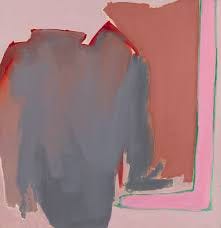
Paintings by Ann Purcell whose works from the 1970s are on view at Berry Campbell.
I still have room in my summer class. Enroll soon if you want passage on the boat. More info here.
I will leave you with this gem.
xo Lizzie
Brilliant Lizzie. "There are other things in life that aren’t fast or easy. They demand your deep presence. They demand patience. They demand you tolerate messiness and uncertainty. They demand that you become smarter than you are. They demand that you become more aware than you are. More humble than you are. Like parenthood. Citizenship. Spiritual fitness. Loving relationships. All of these un-artificial things require un-artificial intelligence." Too long for a tattoo?
The Writer's Architecture
What kind of house do you want to build?
Bare and spare?
Grandoise and noisy?
A mansion on a lake or a cabin on a mountain?
An ocean Beach House or a desert dugout?
Wright or Vanderbilt?
Craft witchery or modular monster? Muscular or refined?
Concrete or brick?
English rose garden or prairie wildflowers?
Any or all of the above.
Choose wisely.
Write wildly.